THE CRAFT
Oil paint on silk
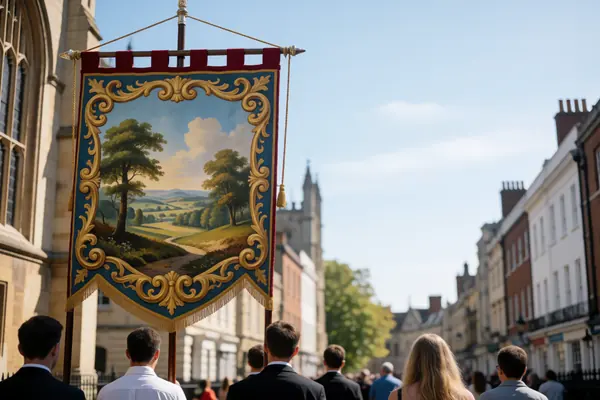
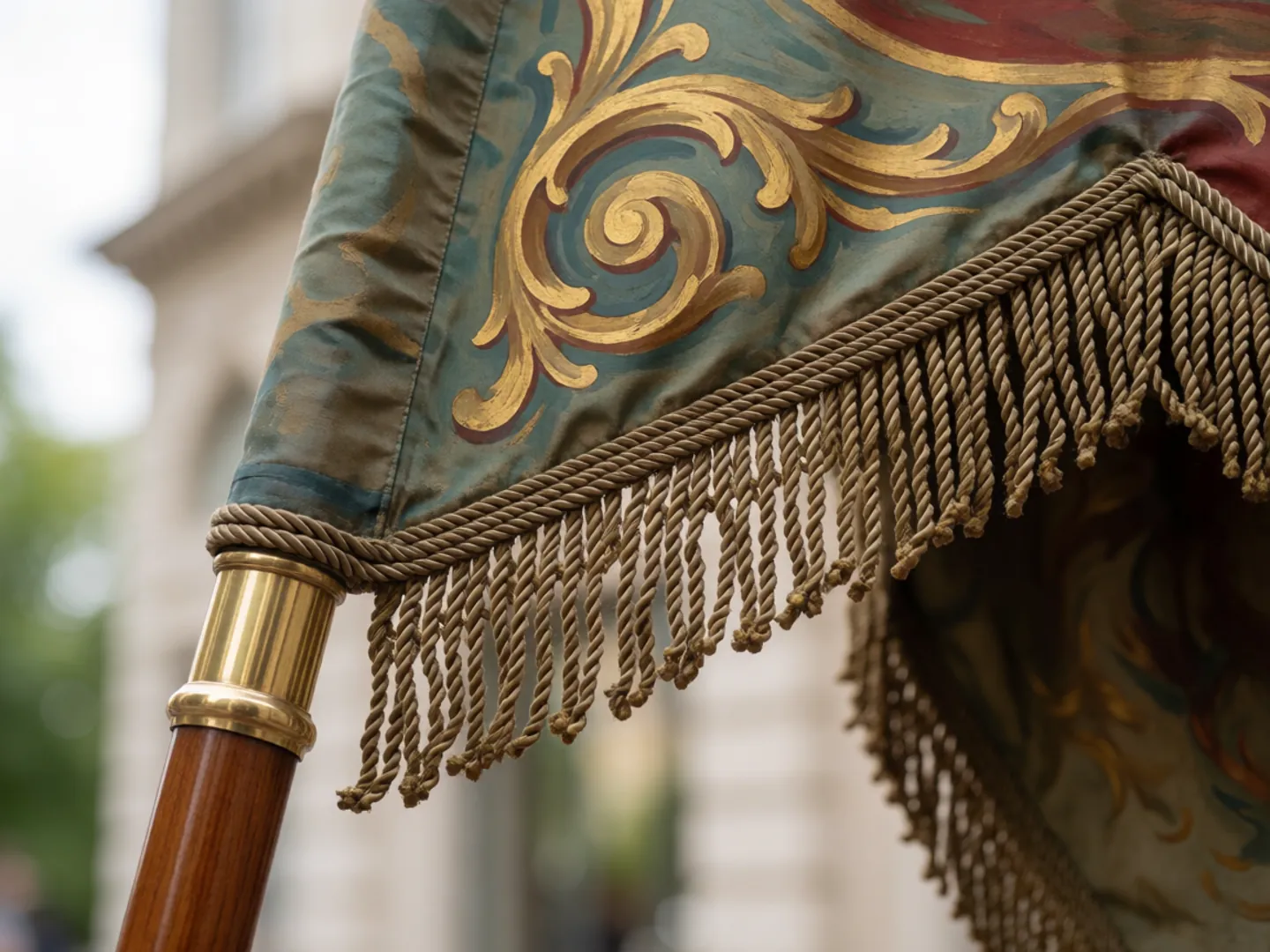
The classic banner is silk painted in oils on both sides. George Tutill's firm, established in 1837, made many from 83 City Road, London, and marked some with a hand-painted maker's stamp.
Read a banner doodleprotest
A CRAFT HISTORY
Before printed placards, there were painted banners.
Read a banner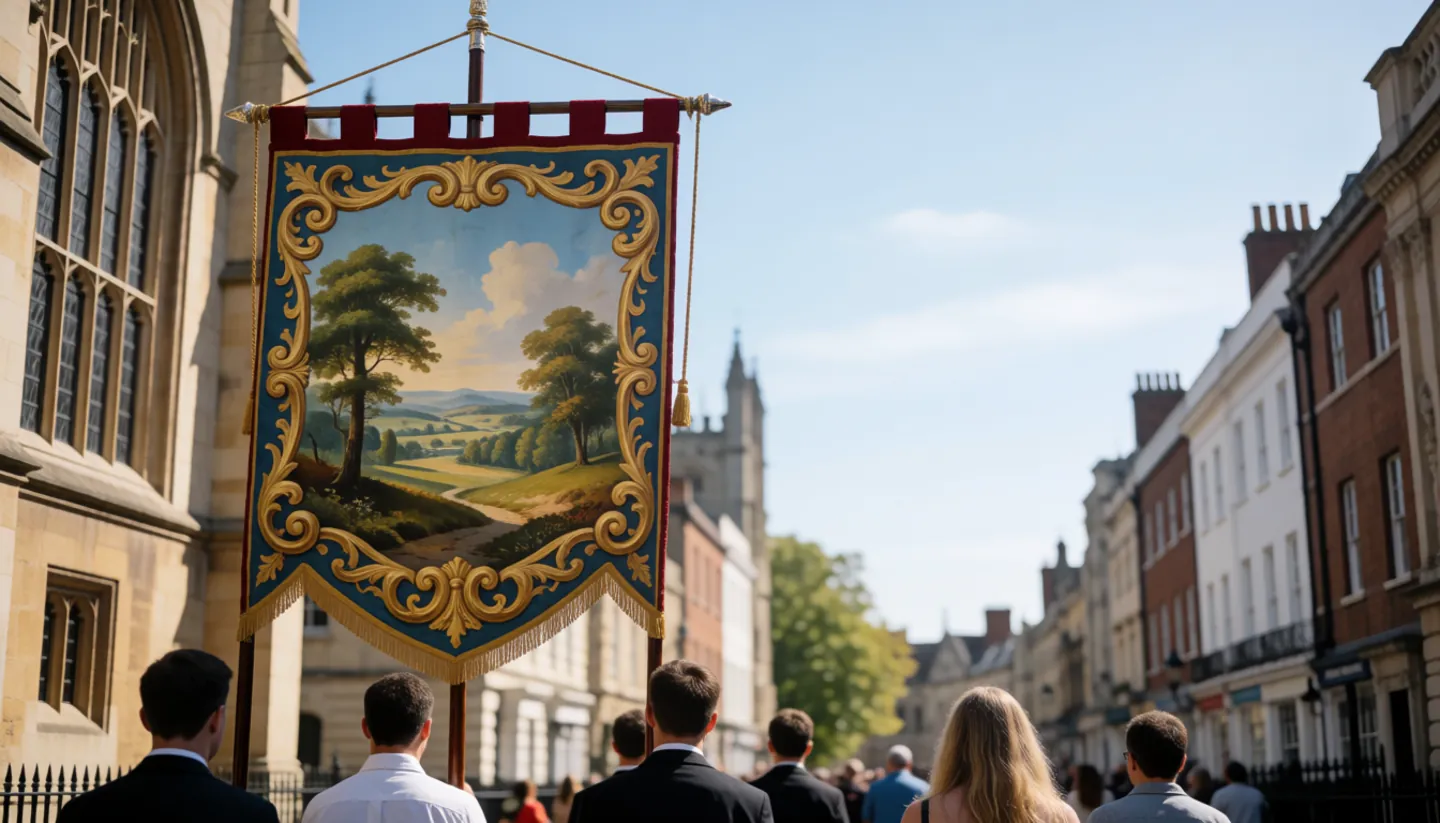
1821the world's oldest trade union banner
Trade unions, miners' lodges and friendly societies paid for huge banners of silk painted in oils, carried on poles through the streets. This independent guide looks at them as works of art and craft, drawing on museum and research sources.
Updated
THE SHORT ANSWER
Three things make these banners special.
Each comes from museum or research sources.
THE CRAFT
The classic banner is silk painted in oils on both sides. George Tutill's firm, established in 1837, made many from 83 City Road, London, and marked some with a hand-painted maker's stamp.
Read a bannerTHE COLLECTION
People's History Museum in Manchester holds over 450 banners, including the oldest trade union banner in the world, the 1821 Tin Plate Workers Society banner.
See the numbersTHE CARE
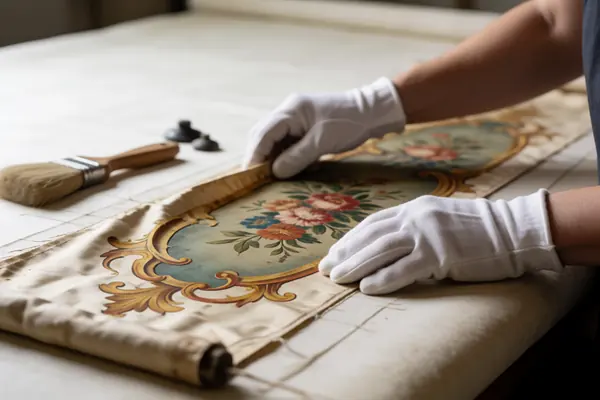
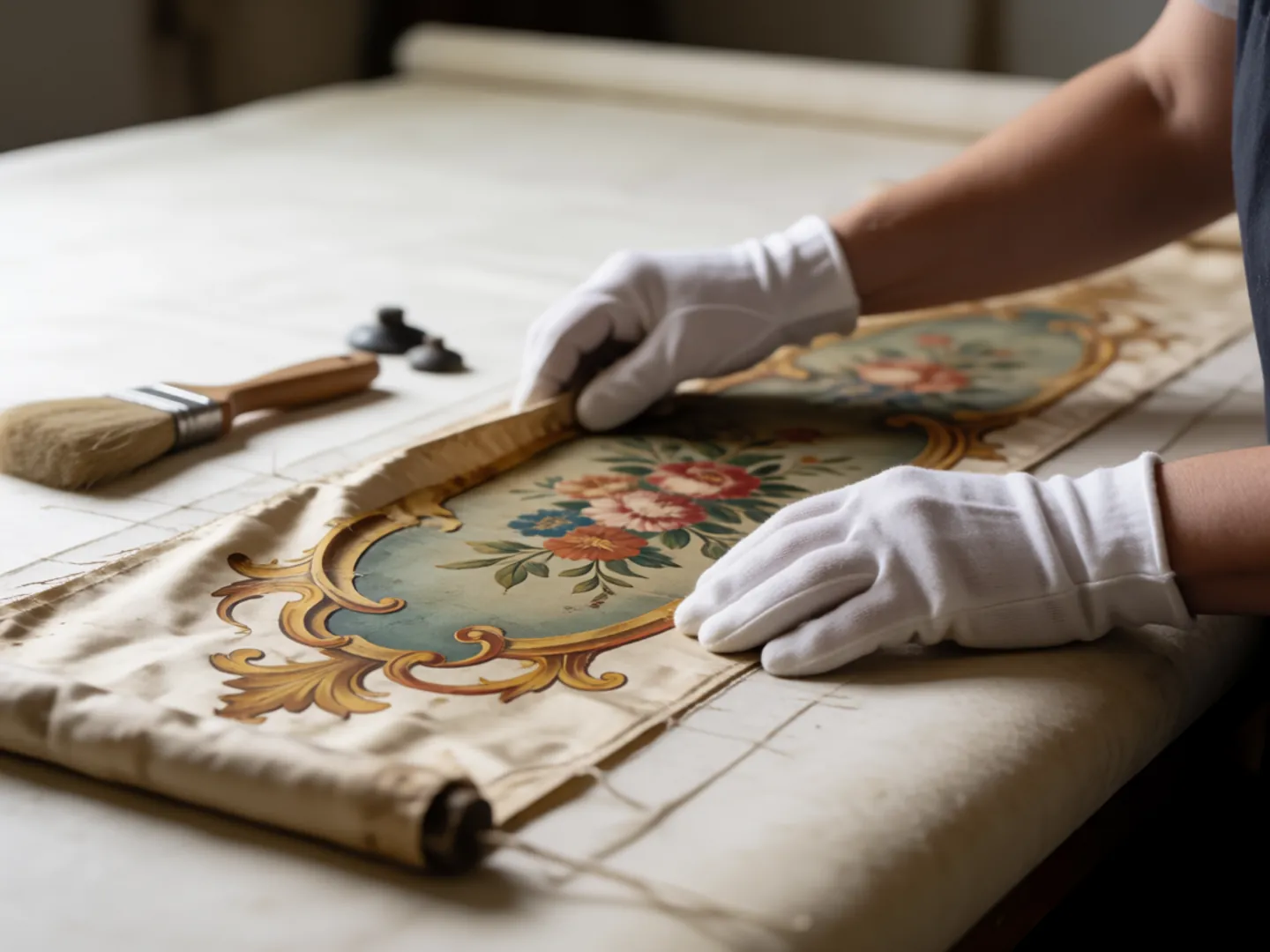
The museum's Conservation Studio was set up in 1990 to conserve its banners. Visitors can watch conservators at work through a viewing window.
How they are keptREAD A BANNER
Durham miners' lodge banners show how the pictures changed over time. Pick a motif to see what it meant. The bar shows roughly when it belongs: short for the earliest banners, long for today's.
Based on a peer-reviewed study of the Durham Miners' Gala in Frontiers in Sociology (2020). History and art only; this site takes no side on any cause.
TWO NUMBERS WORTH KNOWING
One number from a museum collection,
one from today's Durham banner groups.
450+ banners
Banners in one Manchester collection
People's History Museum says it holds over 450 historic and contemporary banners, the largest collection of trade union and political banners in the world.
MUSEUM · PHM
60 groups
Banner groups in County Durham, 2019
The study counted 60 banner groups in Durham in 2019, raising money to restore historic banners and commission new ones from professional makers.
DURHAM · FRONTIERS 2020
The first Durham Miners' Gala was held on 12 August 1871. Lodge members and their families walked behind their own banner and band to a gathering by the River Wear, a format the study says remains unchanged in essence.
FOUR THINGS TO LOOK FOR
Next time you see a historic banner in a museum or a procession, these details tell you how it was made and how it has lived.
Some Tutill banners carry a hand-painted stamp, 'G. Tutill 83 City Road, London', or a painted signature mark.
Many banners are a single layer of silk painted on both sides, so the back is a second picture, not a lining.
Later restorations can show as newer paint or tape. Conservators sometimes keep them as part of the banner's history.
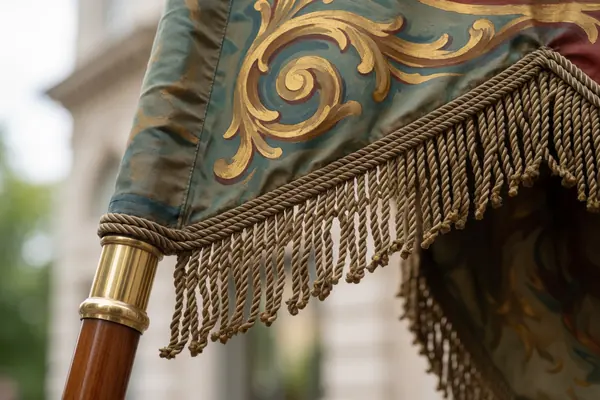
Poles, brass holders, toppers and tasselled fringes travelled with the banner, sometimes in a long wooden box.
KEEPING THEM FLYING
Silk banners were expensive and vulnerable to fading and damp. The Bottesford Friendly Society paid £15 9s 6d for its banner in 1888, around four months' earnings for an average manual worker, according to local historians.
At People's History Museum, conservators treat banners and other large textiles. A 2012 paper on a Tutill banner of about 1918 describes 1970s acrylic over-painting and support tape that were kept because they were stable and part of the banner's story.
Questions
The classic processional banner is silk painted in oils, often on both sides of a single layer. A conservation paper describes a Tutill banner of about 1918 in exactly this way.
A banner maker whose firm was established in 1837; his banners carry the address 83 City Road, London. His stylised designs, with gold scrollwork and painted scenes, are typical of many surviving union and friendly society banners.
People's History Museum in Manchester holds over 450 banners, including the 1821 Tin Plate Workers Society banner, and changes its banner display each year. Its Conservation Studio can be seen through a gallery window.
At the Durham Miners' Gala, black crepe on a banner traditionally meant that someone had been killed at that lodge's pit in the past year.
Yes. A 2020 study counted 60 banner groups in County Durham in 2019, restoring old banners and commissioning new ones, usually from professional makers.
ABOUT THIS NAME
doodleprotest.com is part of the DoodleSale portfolio. It isn't in an auction right now, but you can ask about leasing it.